Building Systems That Deliver: Inside AUEED’s Approach to Education in Egypt
Article |
Alfanar |
2026-07-02
Egypt's education sector is at an inflection point. Enrolment rates have risen over the years, but ensuring quality – particularly in Upper Egypt – requires organisations with deep local roots and the long-term commitment to deliver lasting change. AUEED embodies exactly that: a locally-led organisation that has spent over 85 years building education systems from within the communities it serves. We are pleased to welcome them as Alfanar's latest SUSTAIN grantee.
Our SUSTAIN portfolio supports social enterprises that have moved beyond early-stage growth and are ready to scale sustainably. Through funding, capacity building, and hands-on mentorship, we are supporting AUEED to expand its proven approach to inquiry-based science education, strengthen its organisational foundations, and deepen its impact across Upper Egypt.
A Track Record Built Over Decades
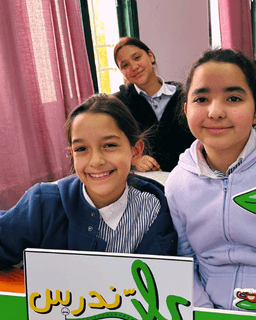
Founded in 1940, AUEED is one of Egypt’s longest-standing civil society organisations working in underserved communities across Upper Egypt. Today, it operates 35 schools serving more than 13,000 students while reaching communities across more than 200 villages through its wider development programmes.
That longevity reflects an organisation that has continued to adapt across shifting political and economic realities while remaining rooted in the communities it serves. AUEED’s schools focus on inclusive education as a direct lever for breaking cycles of poverty – uplifting not only students, but families and wider communities.
What makes AUEED particularly distinctive is its evolution into a hybrid social enterprise model. Over the past two decades, the organisation has built diversified income streams that now cover more than 70% of operational costs, reducing dependency on donor funding while preserving access for low-income students.
Why Upper Egypt, Why Now
The structural challenges facing education in Upper Egypt remain significant. Upper Egypt is home to roughly 38% of Egypt’s population, yet many rural schools continue to face overcrowded classrooms, shortages of trained science teachers, and limited laboratory and STEM learning facilities.
Learning outcomes also point to deeper systemic gaps. In the TIMSS 2019 assessment, Egyptian students scored 389 in science compared to the international benchmark of 500, reflecting limited exposure to inquiry-based and analytical learning approaches. At the same time, poverty rates in governorates such as Minya, Assiut, and Sohag often exceed 50%, creating additional barriers to educational access and enrichment opportunities.
AUEED has spent decades building a systems-level response to these realities. Its model combines formal schooling with teacher development, community engagement, and long-term institutional sustainability – creating the conditions for education reform that can endure beyond individual projects or funding cycles.
What Alfanar Will Support
Our support will build on a pilot already implemented across 10 AUEED schools, where inquiry-based science learning showed strong early results. During the pilot, 220 students participated in weekly science club sessions exploring topics such as renewable energy, water conservation, and assistive technologies, while participating schools saw arithmetic scores increase from 72% to 86% between pre- and post-assessments.
Our investment will help scale and embed that approach across AUEED’s wider network. Over the next three years, the programme aims to reach over 7,000 students across 25 schools in Minya, Assiut, Sohag, and Luxor, while training 100 teachers and school leaders in inquiry-based science education.
“AUEED is one of the oldest and largest social enterprises providing quality schooling and education in some of the most underserved villages in Upper Egypt,” said Alfanar’s Egypt Director, Shenouda Bissada. “Through Alfanar’s investment, AUEED is transforming math and science education by introducing an inquiry-based learning approach that will reach more than 7,000 students across 15 schools. Together, we are working towards a model that demonstrates how quality education can thrive even in low-resource settings, creating an inspiring example for public schools across Egypt.”
Alongside the education programme, Alfanar will support AUEED to strengthen its long-term organisational sustainability through a three-year strategic plan and an impact measurement framework aligned with our IMM approach.
“We are delighted to embark on this new partnership with Alfanar Venture Philanthropy, which will enable us to deepen and expand the quality of education we provide to children across Upper Egypt through inquiry-based science learning in our schools,” said Hani Sabongui, General Director of AUEED. “Beyond the generous financial support, we look forward to the strategic capacity development that Alfanar will provide, strengthening AUEED’s institutional agility and enhancing the long-term sustainability of our services for disadvantaged communities."
This new engagement reflects what long-term systems change requires: backing locally rooted institutions with the capital and strategic support needed to strengthen education systems over time.