Yalla Nodrus: Building a Learning System in Real Time
Feature |
Alfanar |
2026-06-03
“Using this platform is part of a national duty to develop our education as a form of resistance.” – Grade 9 student, Shuqba School
In April 2026, schools across Palestine reopened after another prolonged period of interrupted learning. From COVID-19 through the escalation of conflict in October 2023, there has rarely been a "normal" day of learning in Palestine. Repeated school closures, movement restrictions and instability continue to shape students’ access to learning.
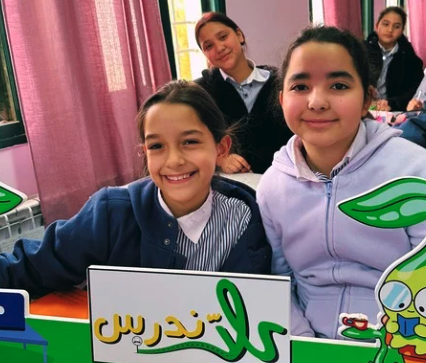
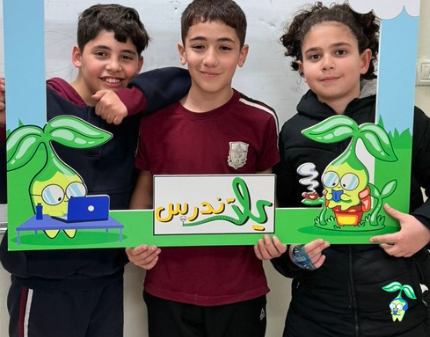
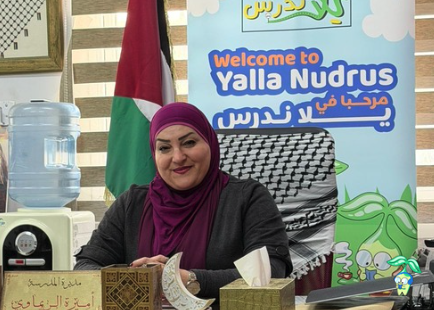
As schools resumed, the Yalla Nodrus team went into classrooms alongside students and teachers. Students spoke excitedly about returning to face-to-face learning: seeing their friends, playing in the playground, and buying food from the cafeteria. Teachers were equally grateful to be back in schools – rebuilding lesson plans and working to cover the curriculum to prepare students for their midterm exams.
The team visited five public schools and three private schools across Ramallah and Birzeit, including five schools serving under-resourced communities. Together, the eight pilot schools are currently reaching 1,600 students across grades 5,7 and 9.
Across every school, there was a shared determination to restore not only access to education – but to protect continuity, stability, and future opportunity for students.
Beyond a Platform
Yalla Nodrus is not simply a digital tool. It is part of a broader effort to build a locally-rooted curriculum-aligned learning system that can support continuity in education – particularly in contexts where disruption is not the exception, but the norm.
This initiative is also an extension of Alfanar’s work to scale social enterprises across the region. Yalla Nodrus brings together solutions developed by Lebanese Alternative Learning (Tabshoura) and Kamkalima, with Al Nayzak as implementing partner, and funding support from Drosos Foundation. Together, the programme draws on existing regional expertise to build a platform grounded in the realities of Palestinian classrooms.
That ambition is already visible in the classroom. Teachers highlighted the platform’s ability to make lessons more interactive, particularly in subjects where physical resources are limited. As one science teacher from Betunia School noted: “The platform offers engaging activities for science lessons… it was helpful and interactive, especially as we did not have access to a science lab.”
An Honest Picture of Early Adoption
At the same time, the visits provided a clear view of where bottlenecks exist. Usage remains early, with many students only just being introduced to the platform. Teachers are determining how to integrate it into their daily teaching. In some cases, core elements such as account access and onboarding are still being completed.
This is what early-stage implementation looks like when building a system-level response to gaps in education. What matters next is how we can adapt our programming and resources to best support students and educators.
What the Visits Made Clear
Three factors are already shaping outcomes:
- Teacher engagement is decisive. Where teachers actively use the platform, students follow.
- Onboarding needs to be intentional. Access alone is not enough – students need to understand what the platform is and how it fits into their learning.
- Content drives credibility. Gaps in core subjects such as Math and Science directly affect how the platform is perceived and used.
A fourth factor cuts across all of these: school leadership. Where administrators are engaged, implementation moves forward.
From Insight to Action
The visits are already shaping the next phase of the programme – from more targeted teacher training and structured student onboarding, to accelerated content development and stronger accountability at the school level.
Rather than treating implementation as fixed, the platform is evolving through continuous feedback from the students, teachers, and schools using it every day.
Why This Matters Now
In contexts where learning is repeatedly interrupted, continuity cannot depend on static systems. Educational tools need to be flexible enough to respond to changing realities, while remaining grounded in the day-to-day experiences of students and teachers.
Yalla Nodrus is being built with that principle in mind: not simply as a digital platform, but as part of a longer-term effort to strengthen locally grounded learning infrastructure that can continue evolving alongside the needs of Palestinian schools.
As the programme continues to evolve, additional support will help expand content, strengthen implementation, and deepen engagement with schools and educators. If you are interested in contributing to this initiative, we invite you to donate here.